
By: Rainey Madsen
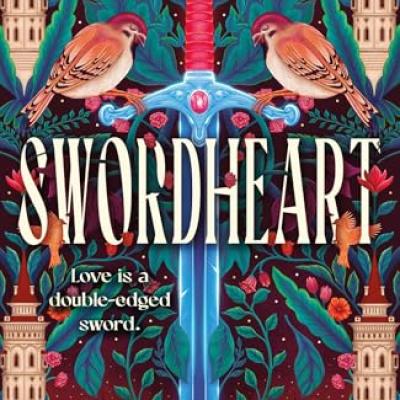
It’s not everyday that an ancient sword that has hung on your wall for years becomes a man, but that’s how Halla life is going now. After the death of her great-uncle leaves her inheriting all of his estate, Halla’s in-laws decide to take matters into their own hands to get that inheritance back. They have her locked in her room until she agrees to marry her clammy-handed cousin. Halla, however, is determined to do anything but that, including stabbing herself through the heart first.
Sarkis is an immortal swordsman that has been tied to his sword for hundreds of years. When he is finally unsheathed again, he does not expect his new wielder to be a beautiful lady trying to impale herself on his sword. Now he’s helping her escape from her relatives, and protecting her as they travel to find a way to claim her inheritance without falling to the whims of her in-laws. Only Sarkis is quite prepared for all that his vow of protection entails with Halla. She is smarter than presents herself, though she asks far too many questions for his liking, and despite the leaves in her hair and bedraggled habit she wears, he finds himself wanting to get closer to her than any other wielder he’s had before. It doesn’t help that Halla is determined to learn as much about Sarkis and his sword’s magic as possible.
Swordheart is a witty, fantastical adventure full of hijinks, mystery, humor, and a bit of romance, too. Halla and Sarkis make friends with interesting side characters, including Zale, a priest of the White Rat who is more lawyer than priest, and Brindle, wagon and ox keeper who happens to also be a gnoll. As well, in their adventures Halla must outwit and Sarkis must outmatch terrifying monsters, traveling hills, obnoxious cultists, and the traditional robbers. The story is a mix of fast paced adventure with the cozy comfort of new friends, and a slow-burn romance.
Readers of T. Kingfisher’s Clockwork Boys and Saint of Steel series will enjoy entering the beautiful, magical world of the White Rat, as well as seeing more of its intriguing lore and history. However, Swordheart can be read as a standalone and does not require previous series to be read.