
By: Claudia Young
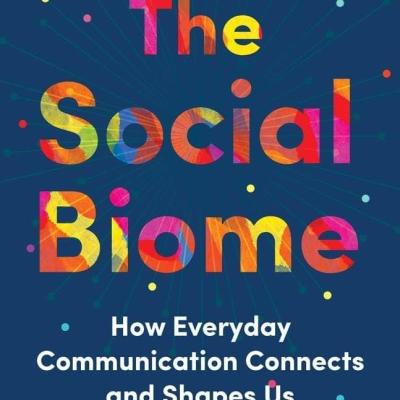
The authors of The Social Biome tell us that “connecting with others can be a pathway to a more hopeful future---for ourselves, our relationships, and our larger communities.” Yet we live in a world that places less value on making meaningful connections outside the digital realm we all inhabit. Why aren’t people connecting? Most people blame work, family obligations, and the lack of time and energy for the inability to make meaningful connections.
Admittedly, relationships are complex and take effort to maintain. Misunderstandings arise. Someone may need something from us. So we retreat into ourselves and spend more time alone than ever before. According to the World Health Organization, “loneliness and social isolation are widespread and considered a major public health crisis.”
“Chronic loneliness causes elevated stress hormones, increased blood pressure, and reduced immune function, making it as dangerous as obesity or lack of exercise. Poor social connection is linked to a 26% increased risk of premature mortality. Loneliness is strongly linked to depression and anxiety, with 60% of chronically lonely people reporting mental distress,” according to WebMD and the National Institutes of Health.
Your social biome has much to say about the quality of your life. Connectedness is not only vital to our mental health, but a predictor of our own mortality and morbidity. Merolla and Hall encourage readers to increase their social obligations to avoid a prolonged state of social inertia. I was surprised to learn that even everyday positive interactions with strangers are a contributing factor to our well-being and overall happiness. The authors remind us that we are all the keepers of one another’s sense of belonging.
The Social Biome has been chosen as the 2026 Capital READ. Madeline Matson, the Capital READ organizer, said, “The Social Biome speaks to all of us in our need for communication, whether meaningful conversations with friends and family or just day-to-day interactions, all of which help us to develop a sense of wellbeing. Dr. Hall explains how to achieve a healthy social biome in this time of division and loneliness. It’s a hopeful and essential book.”
Andy Merolla is a professor in the Department of Communication at the University of California, Santa Barbara. Jeffrey A. Hall is the Department Chair and Professor of Communication Studies at the University of Kansas. He also directs the Relationships and Technology Lab.
Jeffrey Hall will visit the library on Tuesday, April 28, 2025, for a presentation about his and Merolla’s book. In the weeks before his visit, the library and local book/shop, etc., will offer programs and discussions focusing on the book’s many themes. For program details, check www.mrrl.org. Copies of the book are available at MRRL and also at book/shop, etc., located at 125 East High Street.